Grocers and produce operations
Culls and trim that come off the floor as one clean, single-material stream, not sorted out of mixed trash.
Commercial pickup in Harris, Fort Bend, and Montgomery County
Weekly drum swap · $10/barrel · no contract
Houston commercial food waste pickup
We place gasket-sealed drums by your dumpster, swap and weigh them weekly, and compost the food waste on local farms. Start with a free 1-week audit. No contract.
Prefer a human? Call +1 713-822-3398 and talk to Scotty.
The operational fix
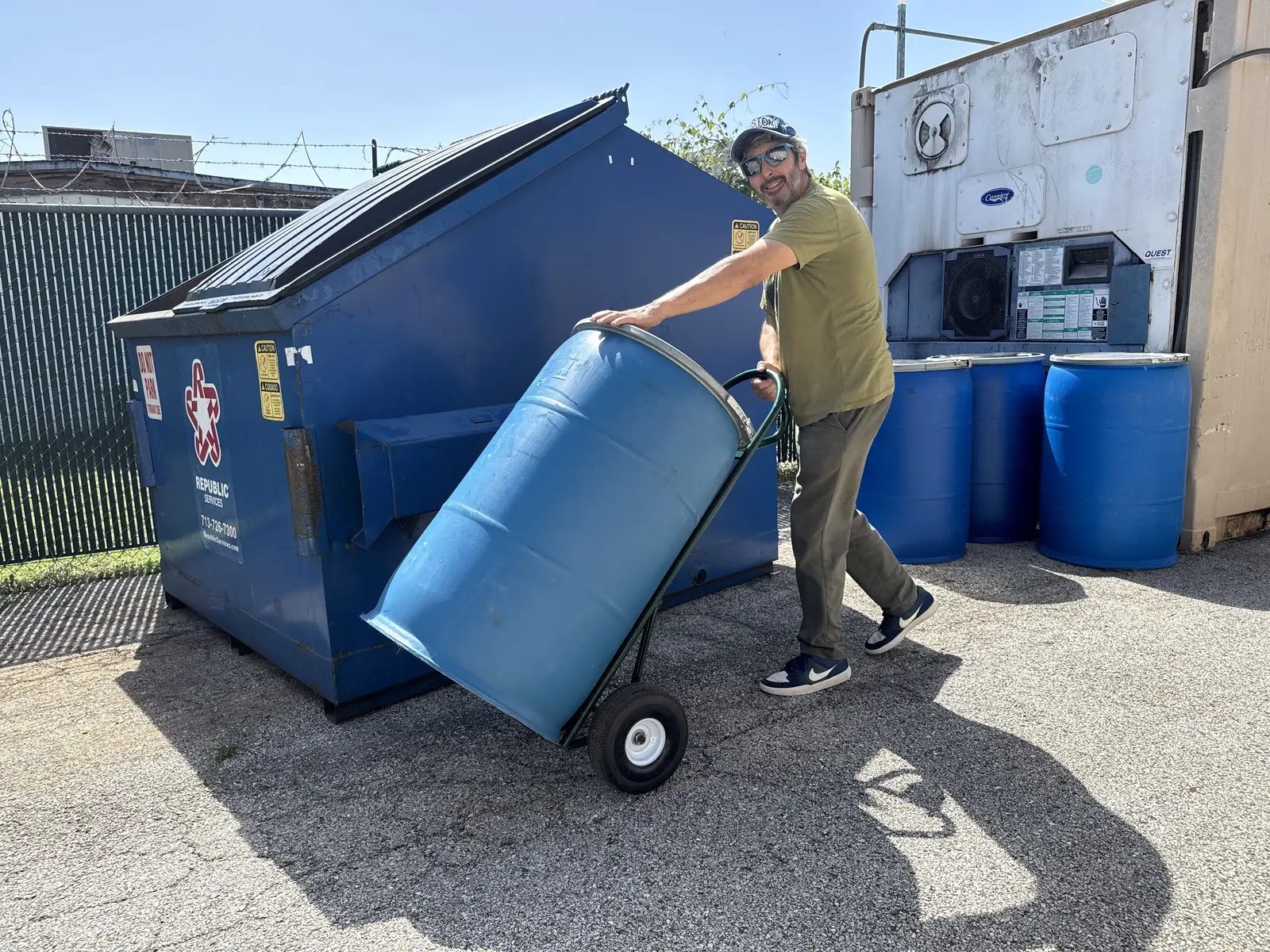
Your staff keeps using a lined food-waste can. At the end of the run, the tied bag goes into our sealed drum instead of the dumpster. We handle the outside work.
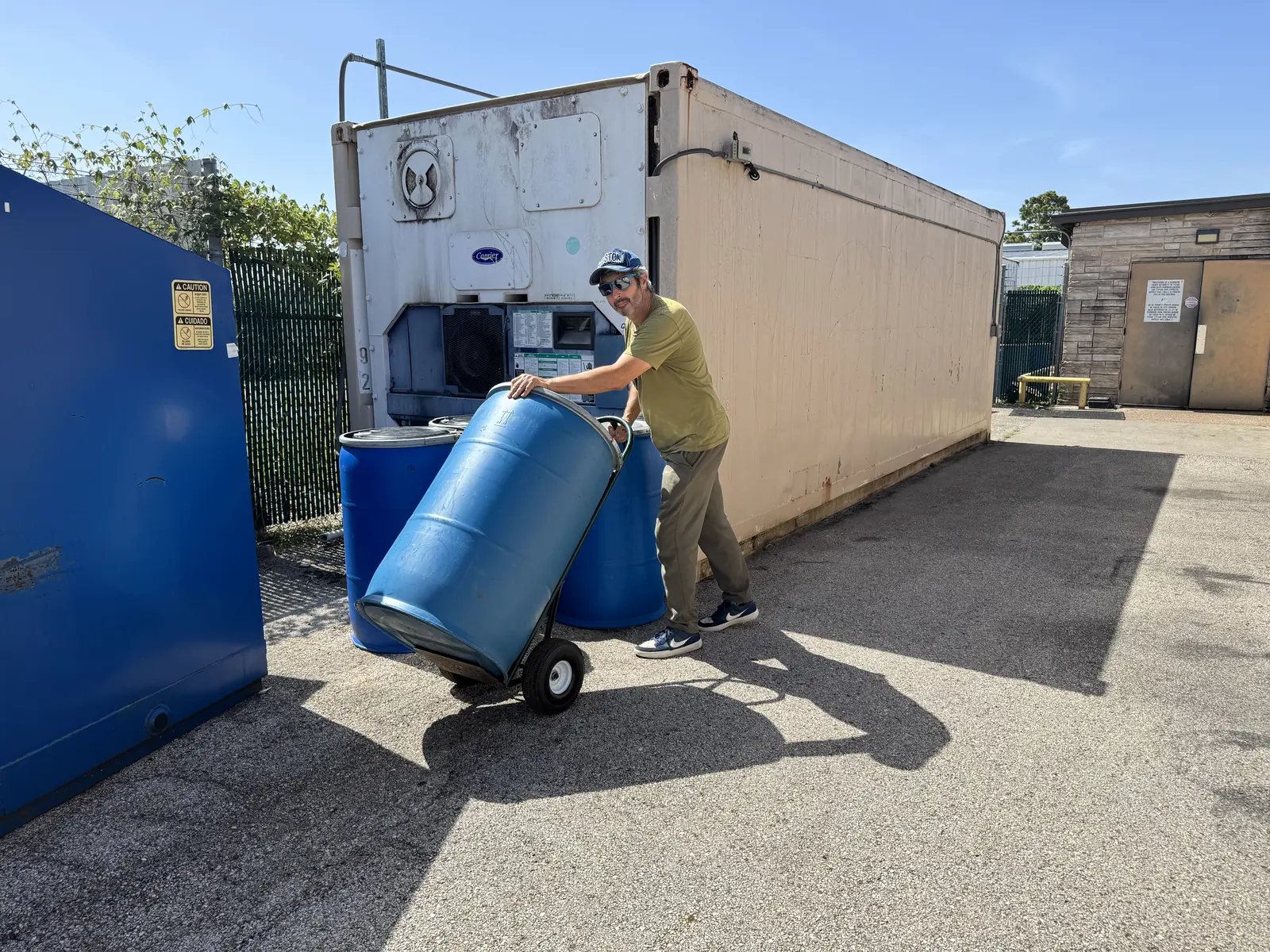
See the full pickup process55-gallon food-grade drums sit by your dumpster or another approved exterior spot.
The kitchen keeps using a lined can. The only change is where the tied bag goes at the end of the run.
Full drums leave, clean drums stay, and your monthly diversion report uses measured weights instead of estimates.
Proof from the route
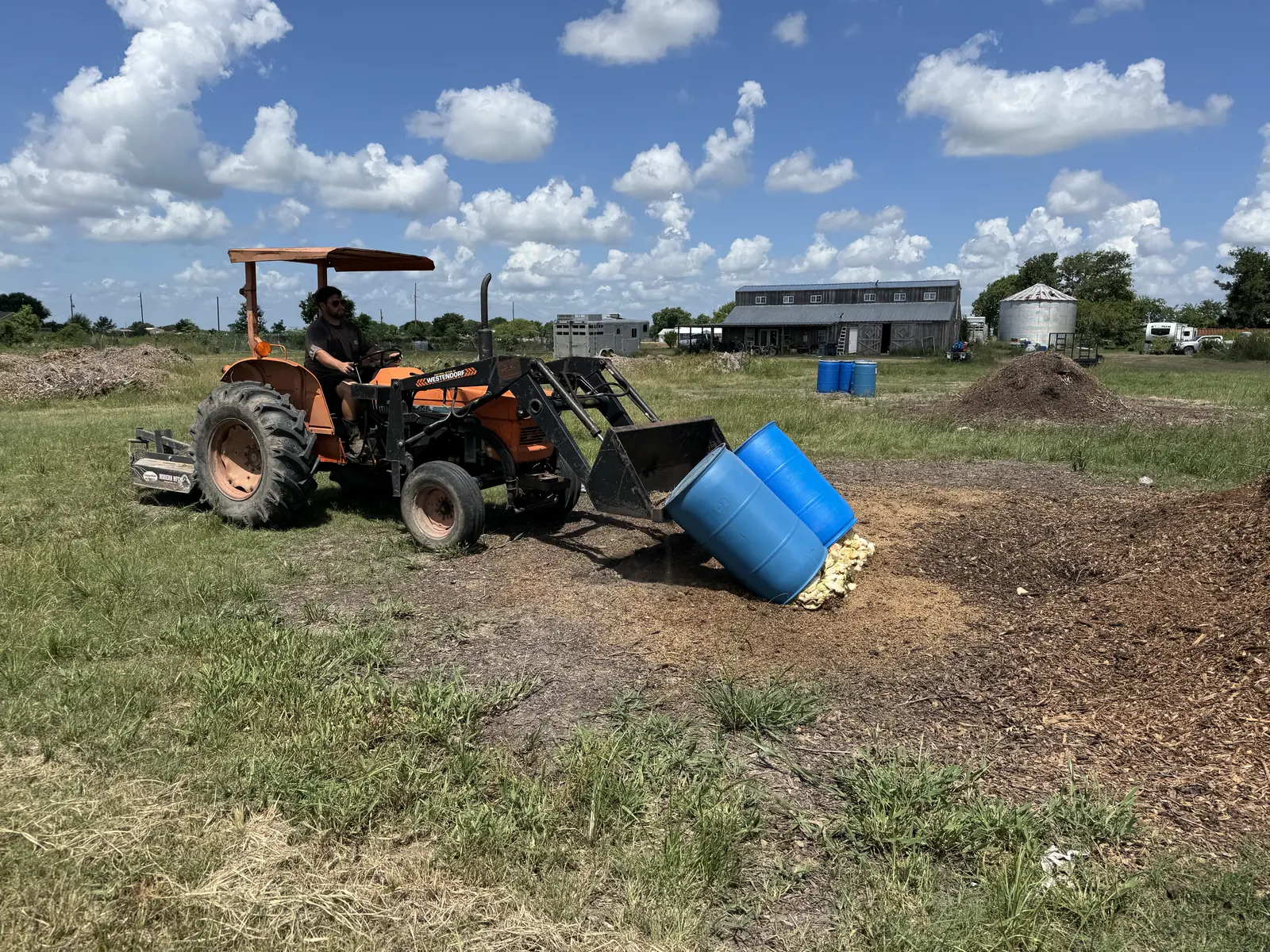
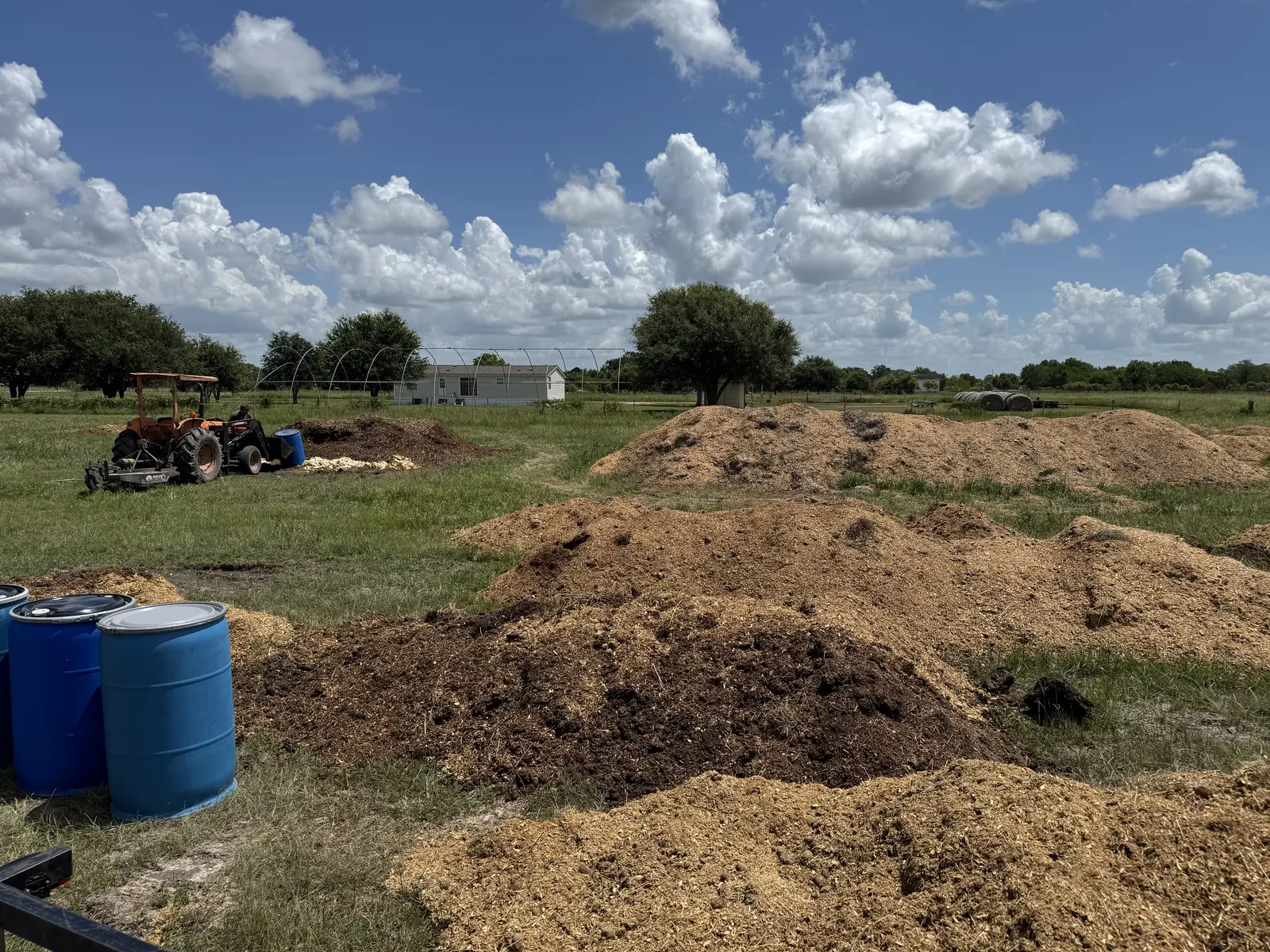
The same drums shown at the business are emptied and composted on Texas farmland. Real operation photos give buyers and search engines something more useful than decorative leaves.
Built for commercial generators
The free audit answers the only volume question that matters: how many measured drums does your location actually produce?
One condition applies to all of it: Organic material must arrive source-separated or depackaged. Streams that arrive mixed with packaging or general trash are not accepted.
Culls and trim that come off the floor as one clean, single-material stream, not sorted out of mixed trash.
A cleaner waste station, predictable weekly service, and numbers ready for internal sustainability reporting.
Recurring organic byproducts that need a local outlet instead of more wet weight in the dumpster.
Dumpster only vs measured diversion
Your general trash service still handles trash. OnFarmCompost removes the food-heavy stream, isolates its weight, and gives it a useful destination.
| Factor | Dumpster only | OnFarmCompost |
|---|---|---|
| Containment | Mixed into open trash | Gasket-sealed 55-gallon drum |
| Food-waste weight | Not isolated by location | Every drum weighed at pickup |
| Destination | Landfill | Composted on local farms |
| Reporting | Hauling invoice | Monthly measured diversion report |
Evidence note: the EPA identifies food as roughly 24% of municipal solid waste sent to U.S. landfills and describes composting as a local, aerobic form of organics recycling. Read the EPA composting overview and landfilled food waste methane research.
Plain pricing
We do not guess your drum count in a sales call. The free 1-week audit measures your actual food-waste volume first.
What goes in
The material goes onto working farmland rather than into a permitted facility, and that is what keeps the accepted list vegetative. For a grocery or a produce market, that list is most of what the back room throws away anyway.
Keep these out
For farmers and landowners
The commercial pickup route creates the material. Our farm services put it to work where the soil needs it.
Common questions
Vegetative food waste: produce culls, trim, and overripe or unsold fruit and vegetables, coffee grounds, eggshells, and depackaged bulk dry goods such as flour and grain. Composting happens on working farms rather than at a permitted facility, and a vegetative feedstock is what lets those farms take material without changing their regulatory footing. Meat, bones, dairy, post-service plate scrapings, grease, paper, plastics, and compostable bioplastics stay out of the drums.
Ongoing service is $10 per barrel. We start with a free 1-week waste audit to measure your volume, then offer a 1-week free service trial if the route is a fit. There is no contract.
Weekly. We remove the full gasket-sealed drums, weigh them, and leave clean replacements. Your team never washes a drum.
It goes directly to local partner farms, where it is composted on the land and used to build Texas soil. It is not bagged and resold at retail.
OnFarmCompost serves commercial customers in Harris County, Fort Bend County, and Montgomery County, Texas. The free audit confirms whether your address fits the current weekly route.
More edge cases live in the commercial composting FAQ.
Start with measurement
We drop off sealed drums, pick them up one week later, weigh the material, and give you a one-page report. You keep the numbers even if you never become a customer.
Call instead: +1 713-822-3398
A business name, ZIP code, and rough volume are enough to start.